2 Relationship between Integrated Responses and Specialist Interventions with men using DFV 6 Evidence-based practice 7 Minimum standards, quality and compliance frameworks Changing violent men: Improving the quality of batterer interventions
2 Primary Health Care responses to men using DFV The Role of the Physician When a Patient Discloses Intimate …
1 Engagement and Motivation of program participants 2 Proactive, front-end and case management responses 2 Relationship between Integrated Responses and Specialist Interventions with men using DFV ‘Making Safe’: A Coordinated Community Response to Empowering Victims …
2 Practice guidance and resources for non-DFV-specialists working with men who use DFV 2 Substance use and DFV perpetration Complicated Matters – A Toolkit Addressing Domestic and Sexual Violence, …
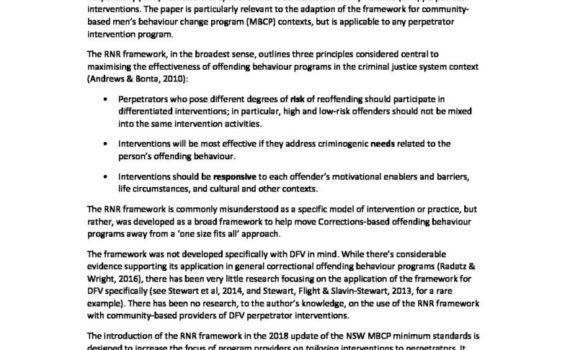
1 Men’s Behaviour Change Practice approaches 1 Tailoring MBCP work and differential responses 6 Evidence-based practice Application of the Risk Need Responsivity framework by community-based MBCP …
2 High risk teams and responses 2 Relationship between Integrated Responses and Specialist Interventions with men using DFV Evaluation of the family violence Integrated Safety Response Trial: Final …
2 Assessment of perpetrator-driven risk 2 High risk teams and responses 4 High-risk perpetrators New initiatives to tackle domestic violence using the Priority Perpetrator …
2 Proactive, front-end and case management responses 4 High-risk perpetrators 6 Evaluations, measures and program effectiveness Evaluation of the Drive Project – a pilot to address …
3 Primary Prevention and cultural change 4 Aboriginal and Torres Strait Islander programs for men using family violence 6 Intersectionality Aboriginal men’s programs tackling family violence: A scoping review.